Pages

Showing posts with label Education. Show all posts

Jan 10, 2012

Jewish Apologetics, Dr. Brown Style

Dr. Michael Brown at Denver Seminary, 01/09/12

So I'm taking this class on Jewish Apologetics with one of my modern-day heros of the faith, Dr. Michael Brown; and I'm really enjoying it. Even though I've read the texts years ago (see list below), I don't mind going through them again. I like to sit in a classroom, watching and listening to a lecture, and interacting with the instructor. I think if I was a single guy without any responsibilities, I'd probably be a professional student. Anyway...

When most folks think of Apologetics a typical image that comes to mind is 'debating in order to win someone to Messiah', in other words 'getting them saved.' However, Apologetics is not necessarily a tool to bring people to faith. Leading someone to Messiah through Apologetics can and does happen, but these instances are not the norm. The goal of Apologetics is to equip the Believer. A study in Apologetics prepares Believers for potential questions and arguments about their faith. This class is on Jewish Apologetics or defending our faith when 'debating' a Jewish person, religious or not. Dr. Brown is an expert in this area. As a Messianic Jew, Dr. Brown has been speaking with and debating religious Jews since he was very young. His five volume book series Answering Jewish Objections to Jesus are based on these personal experiences.

Dr. Brown started the discussion last night by sharing two principles of Apologetics that he finds fundamental. These principles are:
1) Adequately understanding the actual objection. Before we can begin a debate, we need to clearly understand what our opponent's objection is. We need to be patient and spend some time seeking clarity. This could be in the form of repeating their objection back to them but in our own words.
2) Feel the weight of the objection. Once we clearly understand what the objection, it is important that we are sympathetic to their point of view. We should take the time to put ourselves in their shoes; see the world through their eyes. We need to step back and resist 'pulling the trigger' on our response, even if we know we are right.
From Dr. Brown's perspective, the current Christian methods of Jewish Apologetics are nothing more than giving "answers that make us feel good." When Christians respond to Jewish arguments they are not addressing the real issues, and not doing it sympathetically, but rather "getting a monkey off of their backs." In other words, their answers and reasoning sounds good to Christians but the Jews don't buy it and are usually insulted by the Christian response. The Christian answers to Jewish questions are spoken in Christian-ese and not in a way that Jewish people can understand and accept. Christians need to approach Jewish arguments from a Jewish perspective if they want to be effective.

This can be said about any opponent in an argument or debate. When trying to reach any people group, we need to communicate to them in a way that is familiar to them and with respect. I see this all the time when Messianics try to win their Christian friends to Torah by telling them about the pagan origins of their traditions. Is that being sympathetic to their point of view? Messianics will arrogantly ask "What DID Jesus Do?" as if Christians are going to say, "Okay! I will now drop all of my beliefs and traditions just because you asked that clever question." That's an insult; a slap in the face. I'm guilty of this as much as any zealous Messianic, but over the past few years I've taken a new approach; and this class is helping me shape my approach.

In the Messianic camp folks are big on prophecy and prophets. Everyone wants to be a prophet and blow someone out of the water with the word of God and exclaim, "I showed them!" I remember once inviting our Messianic community and our neighbors to a Sukkot party at our house. Two of our Messianic friends blasted an elderly Christian neighbor for worshipping God on Sunday. They later gloated about running this little old lady out of the party. How did that interaction glorify God? It sure didn't win her to Torah.

It would do Messianics some good to keep Dr. Brown's two fundamental principles in mind when answering questions and addressing arguments with Jews and Christians.

I'm looking forward to tonights class—continuing Historical Objections and then on to Theological Objections. Rock'n Roll!

Related Links:
Jewish Apologetics - Christianity's Ongoing and Unique Challenge
Answering Jewish Objections to Jesus: General and Historical Objections (Vol. 1)
Answering Jewish Objections to Jesus: Theological Objections (Vol. 2)
Twenty-Six Reasons Why Jews Don't Believe in Jesus


~

Dec 13, 2011

The Smooth Tongue of the Foreign Woman

For the commandment is a lamp and the teaching is light;
And reproofs for discipline are the way of life
To keep you from the evil woman,
From the smooth tongue of the adulteress.
- Proverbs 6:23,24 (NAS)

In the Proverbs there are two types of women described in detail. One we warn our sons to stay away from, the other we encourage them to look for as a wife. One we teach our daughters not to be like, the other we encourage them to model their lives after. The latter half of Proverbs 6 is about the one that boys should avoid and girls should not emulate. Verses 20-35 contain a parental warning to a son to stay away, far away, from her because she is an adulteress woman.

Some Bibles translate 'the adulteress' (nok-ree': foreigner or foreign woman - i.e. harlot) as the wayward wife, the promiscuous woman, the strange woman, the estranged woman, the loose woman, the vile woman, and the seductress. Obviously she's not a good person to 'hook-up' with. She's trouble, big trouble and if you get involved with her you will regret it for the rest of your life.

We can surmise by the use of the word 'adulteress' that she is a married woman. She already has a husband so why is she looking for another man? Well, she's evil; she's worldly. Her desire is for self gratification; she lives for the moment. She is a foreigner; a pagan. Her standards are contrary to the standards of Adonai; covenant faithfulness is not something she is concerned about. Stay away from her. She is seductive and will only lead you down the path of destruction.


~

Dec 12, 2011

What commandment is a lamp and what teaching is light?

When you walk about, they will guide you;
When you sleep, they will watch over you;
And when you awake, they will talk to you.
For the commandment is a lamp and the teaching is light;
And reproofs for discipline are the way of life

- Proverbs 6:22-23 (NAS)
This morning during family devotions we continued our trek through Proverbs. Today we looked at Proverbs 6:20-23. In the context of the passage the commandment and the teaching that are being referenced are the commandment and teaching of parents. If we keep reading, in verse 24 we learn the reason for the parental instructions. The parents are sharing wisdom "to keep [their son] from the evil woman, from the smooth tongue of the adulteress." Although the world is a much different place today than it was during Solomon's time, we still have these same immorality problems. Sin seems to transcend time but so does The Word of God. The principles found in the Proverbs still applies for us today.

Children are commanded to honor their father and their mother; this includes obeying them. The commandment and teaching of the parents in Proverbs 6 are basically their interpretation and application of the Torah in the daily life of their family. In the Torah, Adonai commands us not to commit adultery. In Proverbs 6, these parents share some insights with their son explaining to him how he can avoid adultery by telling him what or who to stay away from. They also explain to him the consequences if he does succumb to this serious transgression.

As parents, we must impart godly wisdom to our children. We have to take the time to teach them the Word of God and to help them apply these principles to their lives in our modern society. The times have changed but the Word of God remains the same.


~

Oct 22, 2011

Don't Learn Hebrew By Yourself

My Hebrew Classmate, Mike Formby, and me.

When doing something as crazy as learning Hebrew, it's best not to do it alone. When he found out that I had signed up for the TRI Beginning Hebrew Grammar Course, my buddy Mike signed up too. It's good to know that someone is there to encourage you when taking on something as difficult as this. It's also good to know that I am not the only one attempting this with a full-time job and a family! It takes a lot of discipline and it's a huge sacrifice, but I know it will be worth it in the end. Thanks Mike, for the encouragement!


~

Oct 9, 2011

Holy Smokes I'm Reading Hebrew!

Here I am, up late at night learning me some Hebrew from Tim Hegg.

I can't believe it! I'm reading and translating Hebrew! It's coming along slowly but I'm doing it and I am amazing myself. The key is to stay on top of it; practice, read, study, memorize. It's hard man, it's hard. The class is really accelerated. It's only week five and we're already into gender, person, and number (singular/plural); and vocabulary words!

I sure hope we get a break for Sukkot.


~

Sep 6, 2011

TRI Classes Start Today

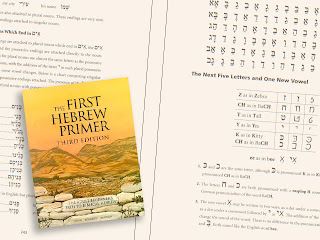
The Adult Beginner's Path to Biblical Hebrew, Third Edition
The First Hebrew Primer:
The Adult Beginner's Path to Biblical Hebrew, Third Edition


It's hard to believe that 18 years ago on this very day I was honorably discharged from the Army. I will never forget this date because finishing my tour with the Army was a huge, huge milestone in my life. I had proven to myself that I had staying power and that I could actually accomplish what I had set my mind to do. One month after I was out, I started working towards a degree in graphic design at the Art Institute of Dallas. After college I had a fulfilling 11-year stint in the design industry. Now, close to two decades after leaving the Armed Forces, I have enrolled in a 3-year, online, Messianic, Torah school. My ultimate goal in taking this course is to learn how to handle the Text correctly, so I can study It properly and teach It more accurately. One of the values of our fledgeling community is the proper handling of the Scriptures and going through this TRI program is my contribution. Because I am married at 40 years old with six children and a full-time job, it will be a challenge to find the time to study. But, this will only be one more test of my resolve and this time, I've got Adonai pulling for me and I've got the help of His Ruach.


~

Aug 17, 2011

Training Wheels Are Not Neccessary

A 4 year old boy sitting proudly on his bicycle.
Aaron rides 'The Rockit'.

Me:"You can do it Aaron, you're a big boy!"
Aaron:"No, I'm not a big boy."
Me:"Yes, you are a big boy.
Aaron:"You are only telling me that to make me happy."

When I began to teach Michaela to ride her bicycle seven years ago, a friend of mine told me about a technique that I had never heard of before. He referred to it as the "The Undersized Bike Approach". Using this technique she was riding on two wheels within seven attempts. I then used this same method with Maya. It took her five attempts. With Isaac it took three tries and with Miryam, five. Over the past few days I've been working with Aaron and he had it down during his second lesson. After successfully using this technique with five of my children, here is my take on The Undersized Bike Approach...

The Bike : How Small Is "Undersized?"

Make sure the child (or adult) is larger than the bicycle that they will be learning on. When they stand with both feet on ground while straddling the bike, there should be some space (1"-2") between their bottom and the seat. You may have to adjust the seat in order to accomplish this.

It is near impossible for a child to learn how to ride a bicycle that is too large for them to handle. This is a common mistake that parents make; one that I made with my first child. It sounds like a good idea to purchase a bike that a child can grow into, however bicycles are not shoes. Consider the professional BMX racers and freestyle riders; they look like giants on the bikes that they ride. A bike is easier to wield around when the rider is bigger than it. When learning how to ride a bike, it is much easier on a smaller bike.

Brian Patterson, Winner of the 1983 Murray World Cup of BMX II
Look how big this guy looks on this BMX Bike!
Brian Patterson (6' 3"), Winner, 1983 Murray World Cup of BMX II 

Maybe you don't want to spend a lot of money on a new 'undersized' bike—get a used one. Go to yard sales or second-hand stores and find a good used one. This bike is temporary and if all goes well, it may only be used for one or two years. I kept the little bike that Isaac learned on and have used it with Miryam and now with Aaron. If it holds up, I may hang on to it for Moses.

Other Options : Balance Bikes, Run Bikes

This Undersized Bike Approach is a common technique used in Europe where riding a bicycle is almost a necessity in some countries. You can now find European 'balance bikes' or 'run bikes' here in the US. These training bikes have been sold in Europe since the 90's and seem to work well, but in my opinion, they are really not necessary and they are too expensive. Here are a couple of examples of the training bikes that are out there today:

The Like-A-Bike 'Midi' Model - $355.00
(Like-A-Bike is the original balance bike for children)
The Norco 'Alloy Run Bike' for Boys - $125.00
(The Girls version is Pink)

Balance Daniel-san! Go Find Balance!

Before a person can ride a bike they need to know how to balance themselves on it (hence the advent of balance bikes). With an undersized bike this can be achieved easily and over a fairly short period of time. First remove the pedals. Yes, remove them; take them off. Not the crank and sprocket, just the pedals. This will allow the person who is learning to sit on the bike and 'walk' it around with their own two feet. They will not need training wheels because their have their own legs to support them when they fall over (Note: until they can balance themselves, they will fall over; over and over again.)

Next, find a nice long, flat surface with a slight grade to practice on (e.g., yard, park, field, sidewalk, street, cul-de-sac etc...). I have used school parking lots when teaching my children especially during the summer months. Most parking lots have a grade to them and schools are typically not in use during the summer.

Keep in mind that younger children will need to build strength in their legs and become familiar with their bike first. When Miryam was learning, I had her ride her bike with the training wheels on (yes, she used training wheels) so she could strengthen her legs. After one complete summer of riding with the training wheels, after her legs were strong enough, I removed the training wheels and the pedals. At first, she didn't like the idea but it didn't take long for her to step up to the balance challenge. I took Aaron's pedals off last year so all last summer he walked his bike up and down the side walk and around the yard. He became very familiar and comfortable with his bike and by the time the weather was right this spring, he was more than ready to begin.

To learn balance, 1) have the child sit on the bike and walk it down the parking lot as fast as they can, building momentum, 2) once they are rolling, have them lift their feet in order to coast down the slight grade 3) allow them to use their feet to keep from falling over. The first few times they may only get a short distance. I tell my kids to "push, push, push and glide". This step requires patience from the parent and a positive attitude. You must continually encourage your child as they try this over and over again. Keep a smile on your face and keep praising them as they try it over and over again. It may take three tries, it may take thirty. It may take one day it may take three months.

Once the child can consistently coast down the length of the parking lot (or field, or sidewalk, or whatever) without assisting with their feet, then the pedals can go back on. Once the pedals are back on the bike (after they have learned to balance) it should only take a few more tries before they are riding the bike on their own.

IMPORTANT: As soon as the child knows how to ride the bike, teach them how to brake, and stop on command!

Building Your Child's Confidence


Here is one of Aaron's first attempts rolling down the parking lot and pedaling:


Every time I've taught a child to ride a bike (I've taught a couple of other children in addition to my own) I have been blessed by seeing the happiness in their eyes because of what they have just accomplished. They have a glow on their face that I wish would stay forever. This is a huge milestone in their young life. It's something that you can bring to mind for the next year or so reminding them of this accomplishment. It may seem like a small thing to you, but to them, this is a major achievement, one that will help build their confidence in their own abilities.

My next bicycle lesson will be in three or four years when Mo is old enough. Until then, I need to keep my other children challenged. Maybe we'll get in-line skates or skateboards...


Related Articles:

Teaching Kids To Ride
by Sheldon "Two Wheeler" Brown
revised May 3, 2010 by John Allen

Training Wheels, Balance Bike or Gyrobike?
The best way to teach kids how to ride a bike.
By Heather Turgeon, June 8, 2010


~

Jul 1, 2011

TRI Mini Course

TRI Moodle Interface

Just finished the TRI Mini Course. I would love to sign up this September but, like I tell my children all the time, "We'll see."

The Moodle interface was useable and intuitive, but the screen was a bit busy. If this course was only three short lessons, I can imagine with three or more complete lessons, the screen could become a bit overwhelming. Maybe a page for each class would be less cluttered? Just a suggestion.

The course was what I expected and hoped for. Lessons that I can listen to on my own time. It gave me the flexibility to do all the things I need to as a husband, father of six, full-time employee and community leader and still make time to listen to the lessons and do the assignments. However, this was a mini course and for the most part, only a peek into how TRI will hold their online classes and how to use Moodle. It was not an indication of how much time will be required every week. My only hope now (aside from money falling into my lap) is that students will be allowed to take one or two classes at a time. It would take me much longer to finish, but hey, I'm patient.

You can find out more about TRI here: torahresourceinstitute.com


~

May 27, 2011

Classrooms Are For Girls


With our sixth child due in less than a month, Margaret and I have been to the doctor's office a lot. Because I've done this a few times now, I am no longer uncomfortable sitting in the waiting room or walking down the hallway to the examining room. It's usually the same ol' rigmarole so I know exactly what to expect, especially in the lobby. I know that the magazine selection is typically going to be geared toward women so I go prepared. Now, I do admit that they will often have a few token (outdated) issues of Field and Stream and Sports Illustrated; but since I don't read that stuff either, I bring with me a book or something to read while we wait. During a visit a few weeks ago Margaret shared an article with me that she found in this month's issue of Parents magazine called Help Your Son Succeed in School. I would never have found this article on my own because I never read Parents magazine. It's called Parents but this magazine is obviously geared toward women or mothers. Anyway...

The description of the article was this:
Today's classrooms are geared toward girls, and it's easy for boys to get discouraged at an early age.
The fact that classrooms are geared toward girls was one of the first things I learned when we started looking into homeschooling our children. Just because they are physically active, many boys are falsely diagnosed with Attention Deficit Hyperactivity Disorder (ADHD). This wasn't a big deal when I was a kid. If it had been, I'm sure they would have used me as the poster child for ADHD. In fact, my brothers were pumped full of Ritalin when they were young because my parents were bamboozled by the 'experts' and they believed this lie. They thought there was something wrong with them because instead of paying attention to the teacher, their minds would wander and they would think about playing outside. They were just being boys, that's all.

Because of the topic of this article, I was surprised that it was even in Parents magazine. I did notice that it didn't speak against public schooling so I wondered if the author knew anything about homeschooling; so I did a bit of research. I found out that the author, Jennifer L. W. Fink, is actually a registered nurse and a single mother of four boys that she homeschools. Check out her blog: bloggingboutboys.blogspot.com It's obvious now that she intentionally wrote this article for public, private, and charter schooling parents of boys. Good for her. I only wish that in her suggested 'blueprint for boys' she would have added as a final option - homeschool your boys.

If you have young boys, whether you plan on homeschooling them or not, read this article and then begin your own research on how to raise them God's way. You can start with the Proverbs.

I also recommend the book Future Men by Douglas Wilson:

Future Men by Douglas Wilson


~

Apr 20, 2011

Career Enrichment At Jones

Learning the ropes from the local HVAC expert at C.D. Jones.

At work they signed me up for a short course in Basic Refrigeration Theory and System Dynamics at C. D. Jones in Denver. I don't have a problem taking classes that will help me do my job better. In fact, I prefer working for a company that provides their employees the opportunity to take enrichment courses like this. I believe it was the training that I received in the Army that helped me to understand the importance of continuing education. Some of my goals in taking a class like this is to learn a new skill, to expand my knowledge, or to get a refresher on those areas that I may think I am already proficient in. I have come to realize that since I can never know everything, I can never stop learning. In this case, this course is helping get a general understanding of HVAC. Since I am not a service technician, it's a bit over my head right now, but I'll catch on.


~

Apr 12, 2011

Hermeneutics Class at Agape Bible Church


Class 4 of 10 with Dr. Darrell Ferguson of Agape Bible Church in Thornton.

Although my schedule this week is totally jam packed preparing for the upcoming MSI Classes, Shabbat Service, and the Passover Seder(s) and Service for next week; I still made time to take a class in Hermeneutics tonight. Hermeneutics is the science of interpretation, especially of the Scriptures. Bible Study classes charge me. Especially good ones; and Dr. Darrell's class is downright awesome!

I first heard Darrell Ferguson back around 2001/2002 on FM 94.7, KRKS. He had a show called Food For Your Soul and at the time, he led a church called Creekside in Louisville. The show went off the air for a while and I stumbled upon it again about a year ago on AM 560, KLZ. Evidently Darrell started another church about 3 years ago in his living room. When they outgrew the living room, they met in a high school gymnasium and then they moved to a small church building and now, they are in their own building on the corner of 84th and Huron in Thornton. The church is called Agape Bible Church. The radio show is still called Food For Your Soul but it is no longer on AM 560, KLZ but you can hear it weekdays on FM 94.7, KRKS at 5:30am and 12:00pm.

I like Darrell's teachings because he is so thorough in his studying. He told me he spends 35 hours in Bible study each week preparing for his Sunday sermon. That's a lot of time and I'm sure this is why his teachings are so awesome. He is also a proponent of Expository Bible teaching. If you are familiar with Expository Bible Study/Teaching, you know it takes time and effort.

The radio show rocks but the live class is better. I'm glad he has allowed me, an outsider, to join his class and learn from him. I greatly appreciate pastors and teachers who freely share their knowledge and experiences.

_